
Hail Damage Roof Inspection: What Adjusters Look For
By Roof Inspection Specialists • La Mirada, CA
Hail is the most misunderstood roof peril in La Mirada. Here is how hail damage inspections actually work — and why "looks fine from the ground" is meaningless.
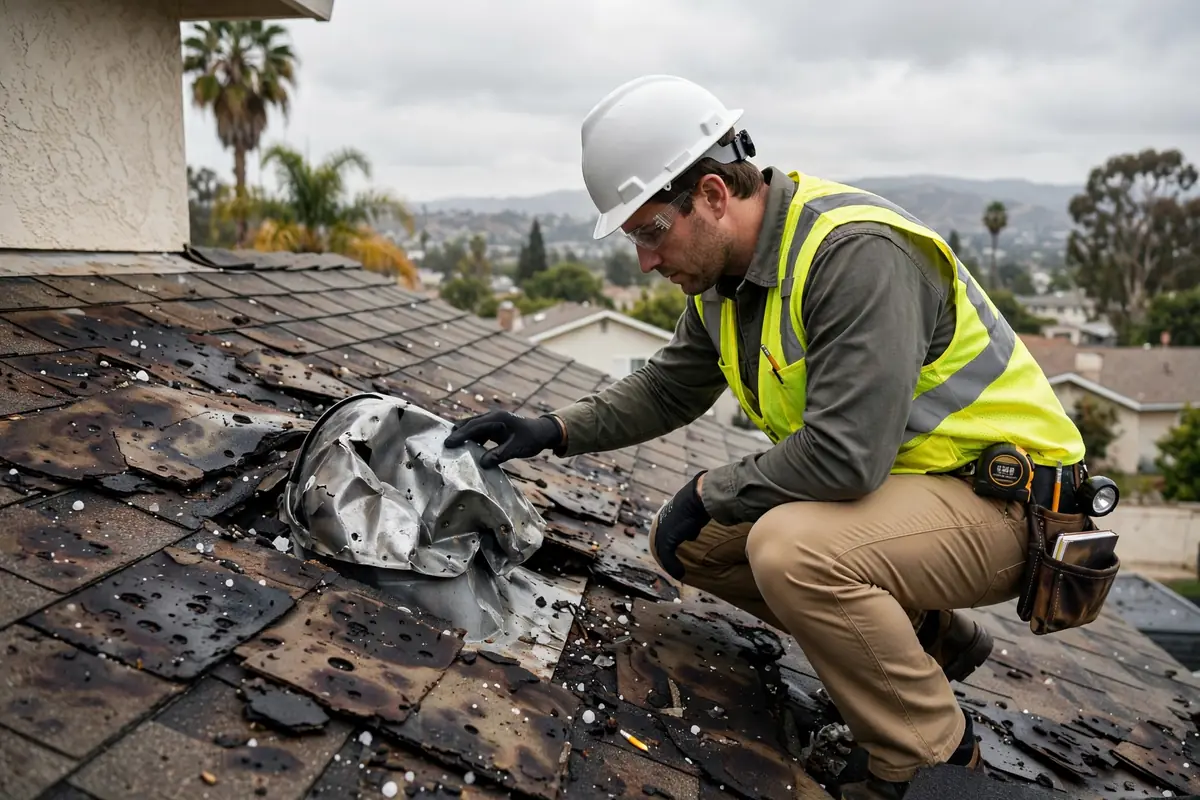
The test-square method
Inspectors chalk 10x10-foot test squares on each slope and count bruises — soft spots where hail fractured the shingle mat. Carriers have thresholds (often 8–10 hits per square) that determine repair vs. replacement. Random, storm-directional patterns distinguish hail from wear.
Collateral damage tells the story
Dented gutters, downspouts, vents, window screens and AC fins corroborate hail size and direction. We document all of it — adjusters expect this evidence package.
Functional vs. cosmetic
Bruised mats are functional damage: the shingle's waterproofing life is shortened even when it looks intact. Cosmetic dents on metal that do not affect performance are a different category. Knowing which you have determines your claim.
Act fast
Hail evidence weathers away. Inspect within weeks of the storm, and remember most policies require prompt notice even though formal filing windows run 1–2 years.
Why It Matters in La Mirada
La Mirada gets relentless Southern California sun, Santa Ana wind events that peel back shingles, and rare but intense winter rain bursts that expose every weak flashing detail on older roofs. An inspection catches the small failures — lifted flashing, cracked boots, clogged valleys — before they become interior damage. At $150 to $400, it is the cheapest roofing decision most homeowners ever make.
What Our Inspections Include
Every Roof Inspection Specialists inspection covers all roof slopes (on foot or by drone), attic decking and ventilation, flashing and penetrations, and gutters and drainage. You get a photo-documented written report within 24 hours — prioritized findings, remaining-life estimate and honest next steps from our inspectors with years of careful roof documentation.
Local Context: La Mirada, CA
Planned tract neighborhoods from the 1960s and 70s — Foster Park, Creek Park, Granada Heights — with composition shingle and concrete tile roofs now 25–40 years old, the peak window for inspection-driven maintenance decisions.
Questions About Your Roof?
Call Now — talk to your local roof inspection team at (888) 974-0663.
Mon-Fri: 8:00 AM - 5:00 PM, Sat: 9:00 AM - 3:00 PM, Sun: Closed • Our call representatives are available 24/7 for emergencies.
Frequently Asked Questions
One-inch hail reliably bruises standard shingles. Larger stones damage even impact-rated products — we document actual damage, not assumptions.
Widespread bruising across slopes means replacement; isolated hits can sometimes be repaired. The test-square counts decide.
Your roof, your storm, your claim. Neighbor activity is irrelevant to your coverage.
More From the Blog
Key Takeaways for La Mirada Homeowners
If you remember nothing else: inspect yearly in La Mirada’s climate, document with photos before you need them, and never let a roof problem age through a Santa Ana wind season. Small issues found in fall cost a fraction of what they cost after a 60-mph wind event or the first big December storm finds them first. When in doubt, call (888) 974-0663 — an inspection is the cheapest roofing decision you’ll make.
Why This Matters in La Mirada, CA 90638
La Mirada’s mix of 1950s–60s housing stock, concrete tile roofs with aging underlayment, October–January Santa Ana winds, and December–March Pacific storms means local roofs fail in specific, predictable ways — from brittle underlayment under perfect-looking tile in Alicante Park to wind-creased shingles on the Knolls at Hillsborough. The guidance above is written for those realities, not generic suburbia. For advice calibrated to your street, call (888) 974-0663.
When to Call Roof Inspection Specialists
Call (888) 974-0663 when you spot any of the warning signs in this guide — or when you simply can’t remember the last time anyone looked closely at your roof. Most La Mirada visits are scheduled within 48 hours, and every visit ends with the same thing: a photo-documented report that tells you exactly what’s happening up there and what to do next. No sales pitch, no pressure — just straight answers from your local roof inspection team.